GALLERY
Blaupunkt Tube Radios
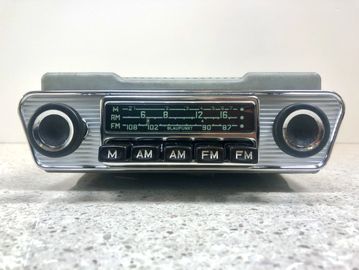
T-Series US Model Blaupunkt Frankfurt
This 1962-1963 Blaupunkt Frankfurt is the last model tube radio signified by both the green dial face as well as the high chassis and cooling holes on top. This particular radio has the Jaguar trapezoidal faceplate.
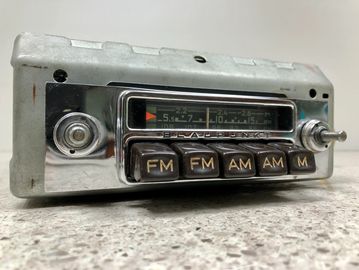
Q-Series US Model Blaupunkt Frankfurt
This 1958-1959 Q-series Blaupunkt Frankfurt is the last model tube radio with the “big button” layout. These buttons are a dark brown. Black and especially ivory button radios are extremely hard to find. After this model year the buttons became smaller and the dial face larger. This particular radio has the Porsche 356 faceplate.
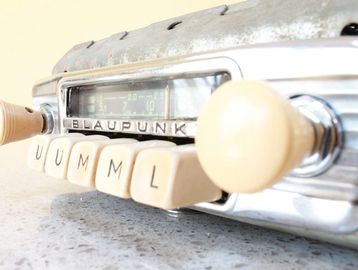
Q-Series Euro Model Blaupunkt Frankfurt
This 1958-1959 Q-series Blaupunkt Frankfurt has the European model configuration with the “U” (FM), ”M” (AM), “L” (Longwave) lettering on the buttons. The FM on these radios only go up to 104 and only 100 on very early radios models.
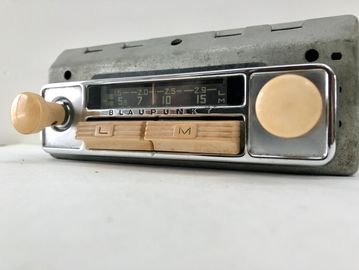
G-Series Blaupunkt Bremen
This 1958-1959 G-Series radio was intended for the European market with both longwave as well as AM. Even though longwave didn't exist in the United States, it was possible to sometimes receive foreign stations on a clear night at higher elevations.
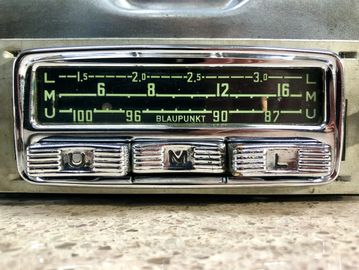
K-Series Blaupunkt Koln
This rare model is the top-of-the-line Koln with auto-seek. Unique to this model is the early introduction of the "small button/large dial face" layout, which all other models adopted five years later. A "rarest-of-the-rare" model with Porsche 356 small chrome bezel. Note: This early European model only goes to 100 on the FM dial!
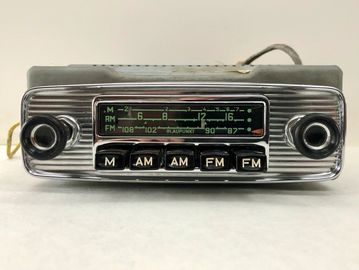
E-Series US Model Blaupunkt Frankfurt
Usually Blaupunkt radios have yearly changes that easily distinguish when they were built. This 1961-1962 E-Series is virtually identical the the 1962-1963 T-Series. This radio is outfitted with a universal faceplate and Mercedes knobs. The black pushbuttons on these early units were made of a plastic that was slightly translucent compared the later black pushbuttons.
Transistorized Radios
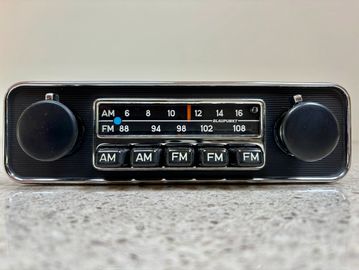
A-Series US Model Blaupunkt Frankfurt
This 1969-1970 Blaupunkt Frankfurt has the largerdiameter soft knobs and faceplate often used on Volkswagen applications.
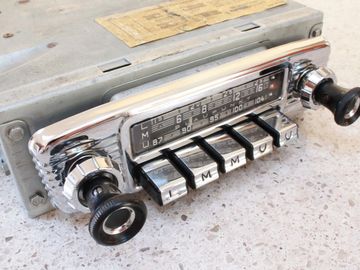
V-Series Euro Model Blaupunkt Koln
This V-Series Blaupunkt Koln has the one-year-only clamshell chassis design and was the last year offered without shortwave.
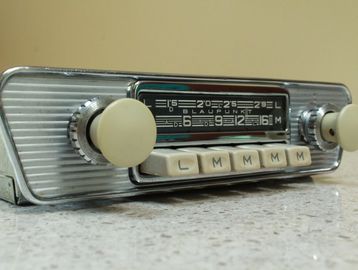
W-Series Euro Model Blaupunkt Hamburg
The Hamburg model was the least expensive model available. The knobs and buttons are beige, and not to be mistaken for ivory.
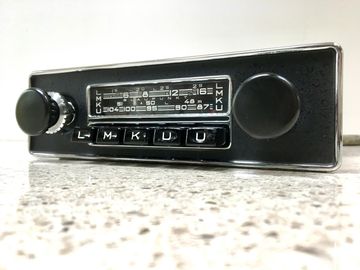
X-Series Euro Model Blaupunkt Frankfurt
The 1966-1967 X-Series Blaupunkt Frankfurt uses castellated solid metal tone levers behind the knobs only used for three years. After the Y-series they were replaced with plastic levers.
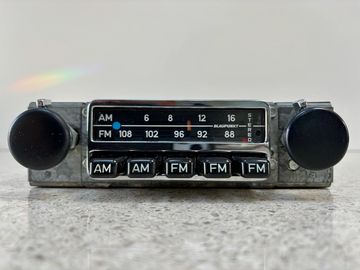
A-Series US Blaupunkt Frankfurt Stereo
15
The 1969-1970 A-series stereo is Blaupunkt's first foray into 2-channel stereo separation. The technology quickly improved with the second generation model introduced two years later.
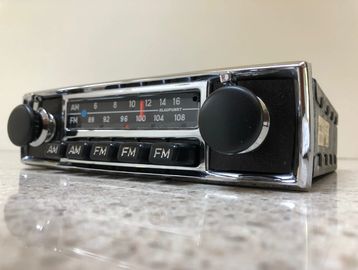
A-Series US Model Blaupunkt Frankfurt
22
As with most Blaupunkt radios, faceplates and knobs can often be switched as seen on this 1969-1970 Blaupunkt with mid 1960's Mercedes faceplate and 1974 soft knobs.
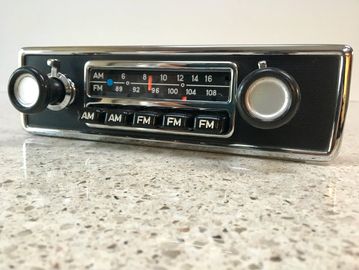
C-Series US Model Blaupunkt Frankfurt
12
This 1971-1972 Blaupunkt mono US model has the BMW 2002 and 3.0 specific tradazoidal faceplate and with knobs that match the cars headlight switch and cigareete lighter.
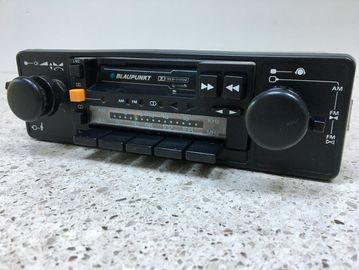
Blaupunkt 1979-1981 CR-2001
15
The Blaupunkt CR-2001 was produced in Japan in the late 1970's and early 1980's. This cassette deck is often found in Porsche and Ferrari vehicles.
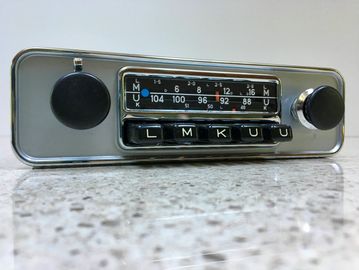
B-Series Euro Model Blaupunkt Frankfurt
22
The 1970-1971 B-Series was the last year with the FM numbers decreasing from the left of the scale down to the right. This change happened back and forth multiple times over the decades.
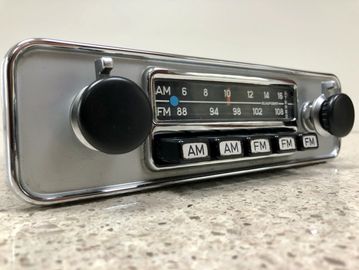
D-Series US Blaupunkt Frankfurt Stereo
This 1972-1973 Blaupunkt is the 2nd generation stereo model. It is easy to differentiate from the 1st generation by the silver front push buttons. After this series the dial scales increased in size.
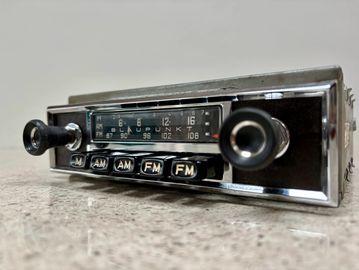
U-Series Euro Model Blaupunkt Frankfurt
The 1963-1964 U-series is the first fully transistorized Blaupunkt and has an early 60's Mercedes faceplate and knobs. This is the first year with white numbers on the dial face.
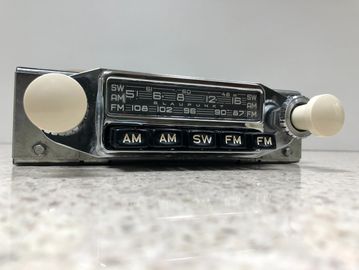
X-Series US Model Blaupunkt Frankfurt
This 1966-1967 Blaupunt X-Series has a combination of black pushbuttons and (slightly earlier) white knobs. Different colors for knobs and buttons was not unheard of.
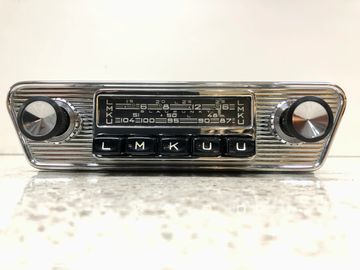
W-Series Euro Model Blaupunkt Frankfurt
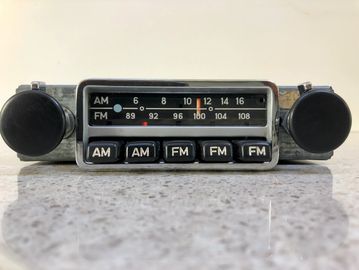
C-Series US Blaupunkt Frankfurt