Installation
Thoughts On The Installation Process
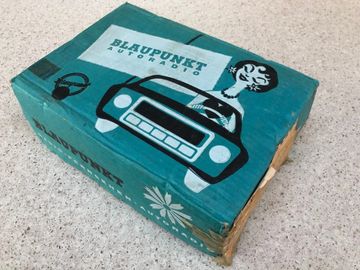
I Have A Radio...Now What?
People often ask us about the basic installation procedures when putting Blaupunkt radios into their vintage cars such as Porsche, Jaguar, BMW or Ferrari. Every installation requires wiring, attachment hardware, a faceplate, shaft nuts, levers and knobs. Here are a few pointers to direct people into the right direction. Obviously not everything is covered here. For specific questions just contact us.
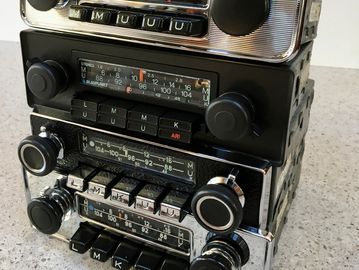
Interchangeability
The body/chassis dimensions of most Blaupunkt radios of the same series are the same, including the universal shaft to shaft spacing. However, the faceplates and knobs vary from one vehicle model to another and changed over the years. For many vehicles you can retain the same faceplate and knobs when swapping from one car to another. However, the overall "look" in regards to faceplate and knob style may not always be correct.
Things That Might Not Work
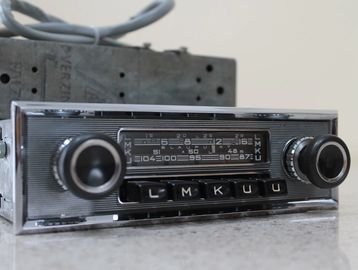
This image shows a European model Blaupunkt Frankfurt with a late 1960's Mercedes faceplate "box-style" faceplate and Mercedes knobs. Due to its mounting depth, this faceplate cannot be used on most other vehicle makes. One example is taking a vintage Blaupunkt out of a late 1960's Mercedes and installing it into a Porsche 356. While the Mercedes faceplate requires one large rectangular opening, the Porsche 911 356 has a "three hole dash".
Things That Should Work
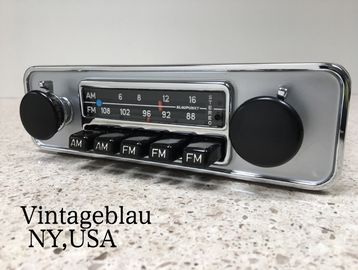
Some faceplates are flush mount and work on most flat dash applications, whether the dash opening is one large rectangle or the "three-hole" style with one small rectangluler opening for the dial window and knobs and two seperate holes for the shafts. There are size differences from faceplate to faceplate style, although usually not more than 3/4 inch in height or width.
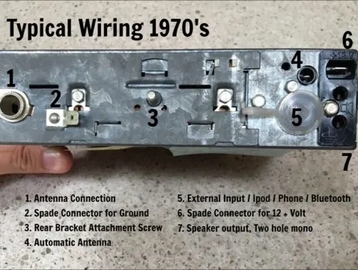
Basic Wiring Connections
1
The wiring process for a vintage Blaupunkt radio is generally a simple procedure. Besides the antenna wire and speaker cables, the only other wires are the positive and negative wires, possibly an automatic antenna cable if applicable. Where these wires connect to Blaupunkt radios changed over the years.
6 Volt/12 Volt
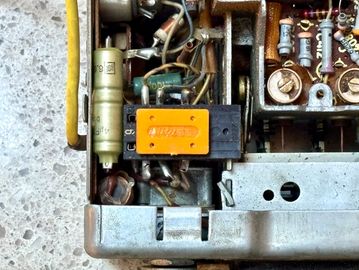
Most Blaupunkt radios produced before the 1969-1970 A-Series can be switched either internally or externally from 6 to 12 volts or vice versa. Some of the early tube radios require more work to do so and sometimes a completely different amplifier. Also, if you own a Blaupunkt München, your radio requires 24 volts!
Negative And Positive Ground
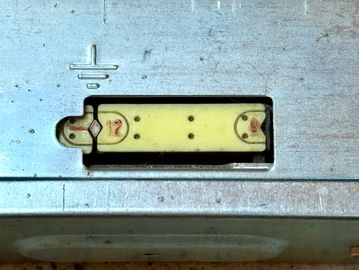
While most classic cars are negative ground vehicles, some (especially British and early American) do have positive ground electrical systems. All radios before the 1969-1970 A-Series can be switched from negative to positive ground. Great care should be taken not to reverse the polarity. Doing so will create instant damage, often somewhat dramatic with smoke and smell!
Proper Radio Grounding
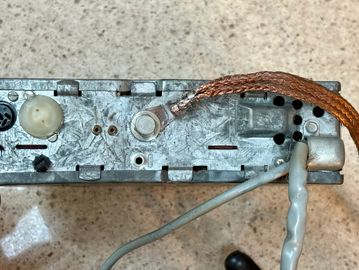
It is important to ground a radio properly in order to ensure its proper function. Bad grounding will result in sub par performance and a lack of reception. For the typical 1970's models, the rear tab on the radio body is designated for attaching the ground wire. For 1960's and 1960's radios a ground wire can be attached directly to the body of the radio using a bracket screw.

The "Hot" Wire
For negative ground 1970's radios, the positive wire should be attached at the +12V tab with an inline 2 or 2.5 amp fuse. The 1960's radios have a permanently attached power wire. It is almost always yellow while very late 1960's radios may have a red power wire. Tube radio require a fuse with a slightly higher amperage such as 3 or 3.5 amps.
Speakers and Auxiliary Connections
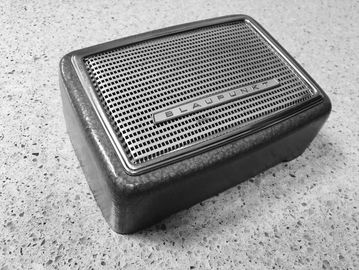
Speakers
Mono output radios are designed to run either one or two speakers. Speakers should be 8 ohm through the until roughly 1973. Using 4 ohm speakers will damage these 8 ohm radios over time. Speaker wattage should be kept relatively low and factory specs are always best. Vintage speakers are hard sprung and meant to create high and mid tones. You can, however, run higher wattage modern speakers and even a subwoofer with a modern circuit board conversion.
.jpeg/:/cr=t:0%25,l:0.12%25,w:99.75%25,h:100%25/rs=w:360,h:270.6766917293233,cg:true)
Speaker Plug Styles
The speaker plugs for a vintage Blaupunkt radio will be one of two styles. The version with two equal round pins were used throughout the 50's, 60's and early 1970's. About 1973 these were changed to the "pin and spade" type that only allow you to insert the plug one way, thus specifying positive and negative output. This corresponds to Blaupunkts change from 8 ohm to 4 ohm speaker requirements. Mono radios use one plug (even when running two speakers), while stereo units require two.
Aux DIN Port
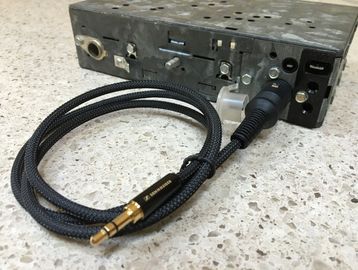
Many Blaupunkt radios beginning in 1967 (X-series) have an input port commonly referred to as the "DIN input". These input ports allow for external devises such as an external tape player, external short wave receiver or an external traffic decoder to easily be plugged into your vehicles stereo system. While a chrome front shortwave receiver or original equipment external tape may have a decorative quality as an optional accessory in the dash of a vintage car, they generally aren't very useful